
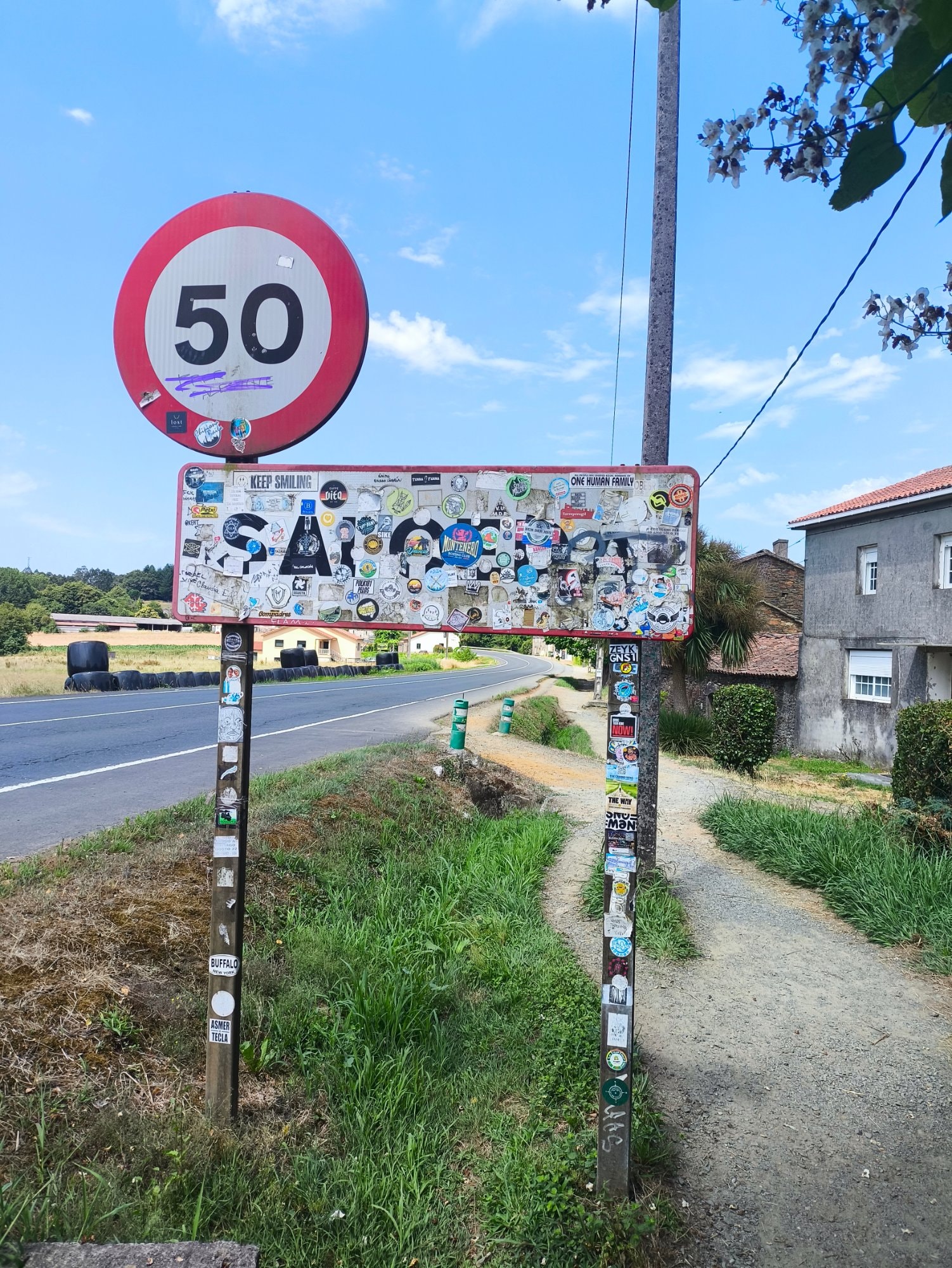
The French Way from Sarria
Walk the final 100 kilometres of the world's most famous pilgrimage route: six days from Sarria to Santiago through oak woods, hamlets and hórreos. Exactly the distance you need to earn the Compostela.
- 115.5 km
- 7 days
- 6 nights
- 5 walking stages
- Easy route
From €175 per person
Request this routeThe route
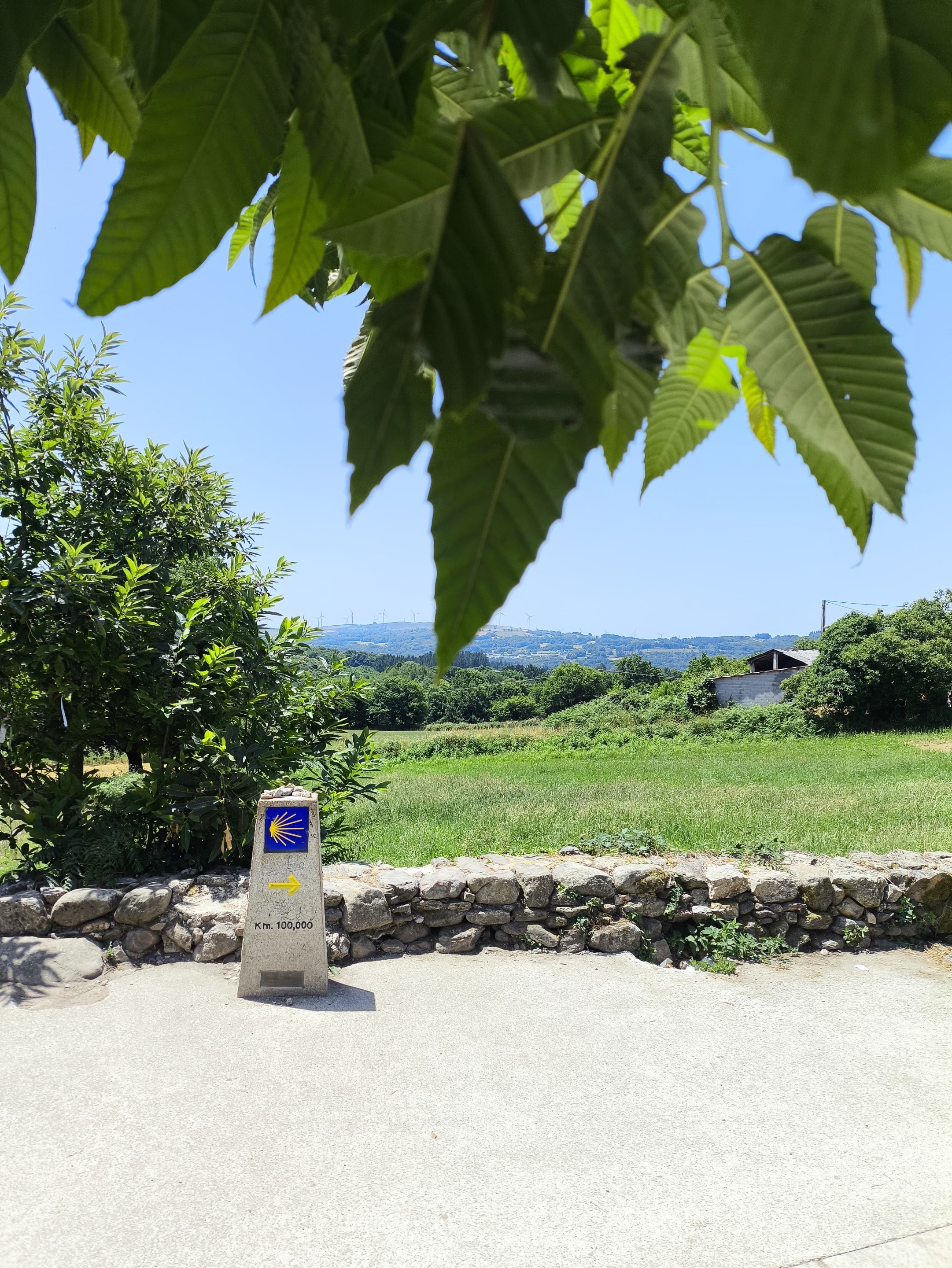
The French Way is the great pilgrimage route, the one that has carried pilgrims from all over Europe to the tomb of the Apostle for over a thousand years. Sarria, just over 100 kilometres from Santiago, is the most popular starting point: the minimum distance required to earn the Compostela certificate.
Over six days you will walk through the rural heart of Galicia: centuries-old oak woods, sunken lanes, stone hamlets and the raised granaries known as hórreos, passing through Portomarín, Palas de Rei, Arzúa and O Pedrouzo.
Along the way you will find gems such as the church of San Nicolás in Portomarín, moved stone by stone when the Belesar reservoir was built, the medieval castle of Pambre and the protected Arzúa-Ulloa cheese.
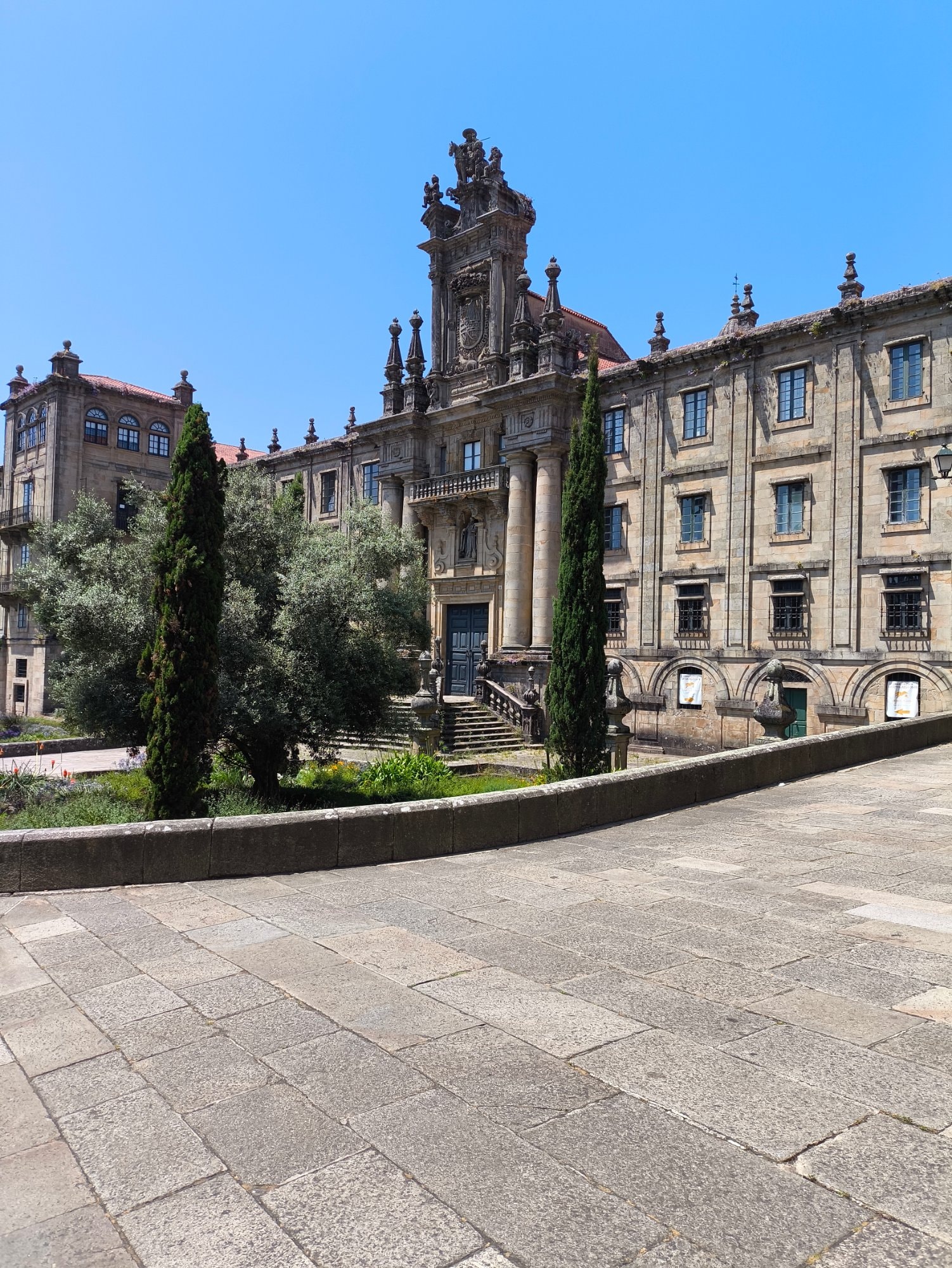
The final reward comes at Monte do Gozo, with your first view of the cathedral towers, and in Obradoiro Square, the heart of a historic quarter listed as a World Heritage Site.
Options and prices
Stage by stage
Day 1
Arrival to Sarria
ArrivalArrival in Sarria, the classic starting point for the last 100 kilometres of the French Way. Spend the afternoon visiting the monastery of La Magdalena and the remains of the castle, or strolling through Chanto park before your first stage.Night in Sarria
Day 2
Sarria → Portomarín
On foot22.5 km5 hYour first stage follows paths that wind between ancient oaks and hórreos. The day ends in Portomarín, on the banks of the Miño, whose church of San Nicolás was moved stone by stone when the Belesar reservoir was built.Night in Portomarín
Day 3
Portomarín → Palas de Rei
On foot24.8 km6 hA day of gentle climbing over the Serra de Ligonde, passing hamlets such as Gonzar and Castromaior with its Romanesque church of Santa María. Near Palas de Rei stands Pambre Castle, one of Galicia's finest 14th-century fortresses.Night in Palas de Rei
Day 4
Palas de Rei → Arzúa
On foot28.5 km7 hThe longest stage of the route crosses the landscapes of the river Iso and passes the church of A Magdalena. In Arzúa, the famous Arzúa-Ulloa cheese awaits. If you would rather split the day in two, there is a variant with an overnight stop in Melide.Night in Arzúa
Day 5
Arzúa → O Pedrouzo (O Pino)
On foot17.7 km4 hA gentle descent through woods and streams, stopping at the chapel of Santa Irene. The day ends in O Pedrouzo, by the church of Santa Eulalia, for your last night before Santiago.Night in O Pedrouzo (O Pino)
Day 6
O Pedrouzo (O Pino) → Santiago de Compostela
On foot22 km5 hThe final stage passes through Lavacolla and Monte do Gozo, where you catch your first glimpse of the cathedral towers. Entering the city through San Lázaro, you arrive at Obradoiro Square, in the heart of the World Heritage old town.Night in Santiago de Compostela
Day 7
Last day in Santiago
Free dayAfter your stay at the selected accommodation, our services come to an end, bringing your Camino journey to a close.
Night in Santiago de Compostela
Pictures from the route
Frequently asked questions
Can I do the Camino on my own and stay in hotels or hostels?
Yes, of course. You can do the Camino independently and stay in hotels and hostels. At Camino Galicia, we offer this option without the need to join a group.
In fact, it is a very common choice: many people decide to do the Camino on their own to enjoy the experience at their own pace, disconnect and experience each stage in a more personal way.
We take care of organising your accommodation, luggage transfers and support throughout the Camino, so you only have to focus on walking and enjoying the experience.
Travelling alone doesn’t mean you’ll be alone: the Camino is a place where it’s very easy to meet other pilgrims and share moments along the route.
Will I have a guide accompanying me on the Camino de Santiago?
No. Our trips are designed so that you can walk the Camino at your own pace, without a guide accompanying you during the stages.
However, you won’t be alone. At Camino Galicia, we take care of organising all the necessary services, and you’ll have support throughout your trip to help with any questions or unexpected situations that may arise.
All you have to do is walk, enjoy the scenery and experience the Camino your own way.
How many days and stages do I need to walk the French Way from Sarria?
From Sarria it is just over 110 km to Santiago, usually split into 5 stages of 20 to 25 km.
We can add extra nights if you would rather take it slowly. Each route page shows the day-by-day itinerary with exact distances.
What kind of footwear should I bring?
Hiking boots or trail shoes that are already broken in. New footwear is the most common cause of blisters on the Camino.
You do not need high boots: it rains in Galicia either way, and what matters is a comfortable, well-held foot. Bring seamless technical socks, two pairs in case one gets wet.
Do I need to train before walking the Camino?
You do not need to be fit, but arriving with some walking behind you makes a real difference.
Walking 1 to 2 hours a couple of days a week during the previous month is enough. If you can, do one long walk with the backpack and footwear you will actually use: it is the best way to find out in time what rubs.
Is this Camino suitable for beginners or people who are not very fit?
Yes. The stretch from Sarria is the busiest and best served of the whole French Way, with villages, bars and accommodation every few kilometres.
There are no technical or mountain sections. Stages are 20-25 km on tracks and paths, and they can always be shortened. If the pace worries you, write to us and we will adjust it.
Is the French Way from Sarria safe?
Yes. It is the stretch with the most pilgrims on the whole route, well signposted and never far from a village.
You will rarely walk alone even if you travel by yourself. The precautions are those of any walking route: carry water, tell someone if you leave the path and do not walk at night.
How do I get to Sarria to start the Camino?
Sarria has both a train and a bus station.
By train there are connections from Madrid, A Coruña and Lugo. By bus, daily services from Lugo and Santiago. If you fly in, the nearest airports are Santiago, A Coruña and Vigo.
Tell us where you are coming from and we will suggest the best connection.
What documents do I need for the trip?
A valid ID card or passport, and the European health card if you are coming from outside Spain.
For the Camino you also need the pilgrim credential, stamped at least twice a day over the last 100 km. It is what lets you claim the Compostela in Santiago. You can get it in Sarria at the parish, the hostels and the friends of the Camino associations.
Do I need travel insurance?
It is not compulsory, but it is strongly recommended. Travel assistance insurance covers medical care and, depending on the policy, cancellation if you end up unable to travel.
Before taking one out yourself, write to us: we will tell you exactly what your trip already covers so you do not pay twice for the same thing.
Do I have to carry my backpack all day?
No, if you want we transport your backpack from one accommodation to the next: leave it in the morning and find it on arrival.
You only walk with a small day pack carrying water, something to eat, a rain jacket and whatever you need along the way.
What should I carry in my day pack?
Water, something to eat, a rain jacket, sun cream, a cap and a charged phone. It can rain in Galicia at any time of year, so the rain jacket comes along even on a sunny morning.
Add plasters or blister dressings: they weigh nothing and you will be glad to have them.
Can I walk the Camino with children?
Yes, and it makes a great family trip. The stretch from Sarria has no technical difficulty and there are villages to stop at often.
The key is to shorten the stages and not set a schedule. Tell us their ages and we will build an itinerary with gentler days.
How far in advance should I book?
For summer and Easter it is worth booking months ahead: this is the busiest stretch and accommodation fills up.
The rest of the year there is more room, but the earlier you book, the more choice you will have over the itinerary and the places you stay.
Time flies! The 2027 Holy Year (Jacobean Year) is just around the corner, and accommodation is already starting to fill up.
Variants of this route
The same route in another version: a different starting point or a different number of walking days.