The Coastal Portuguese Way
Seven days from the seafaring town of Baiona to Santiago: first the Rías Baixas coastline with the Cíes Islands on the horizon, then the classic Portuguese Way. Sea, history and great food.
- 123.6 km
- 8 days
- 7 nights
- 6 walking stages
- Easy route
From €250 per person
Request this routeThe route
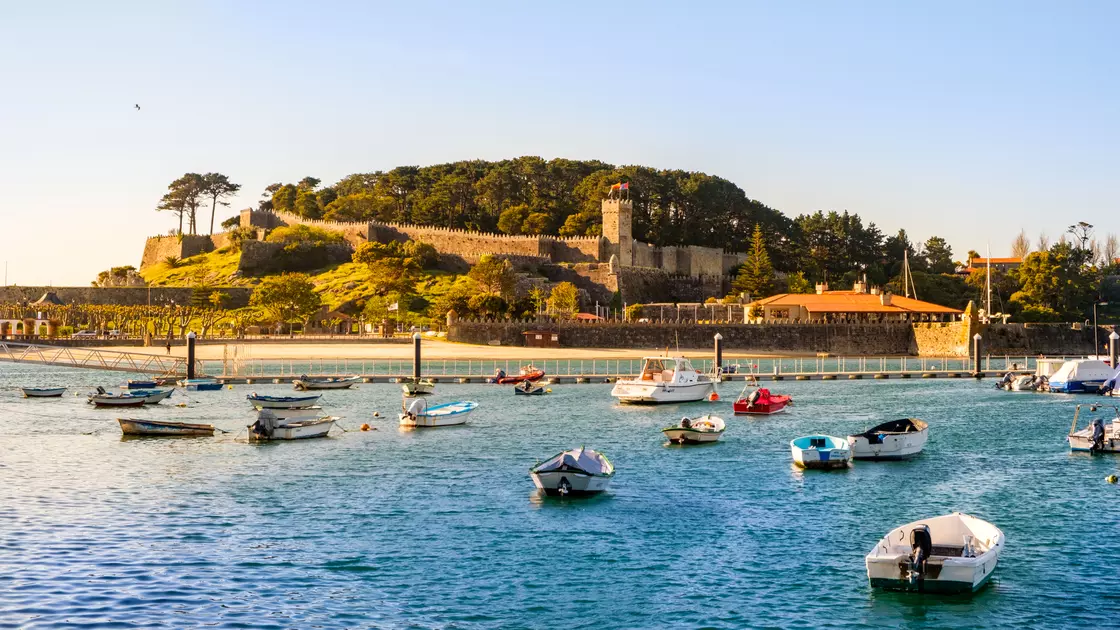
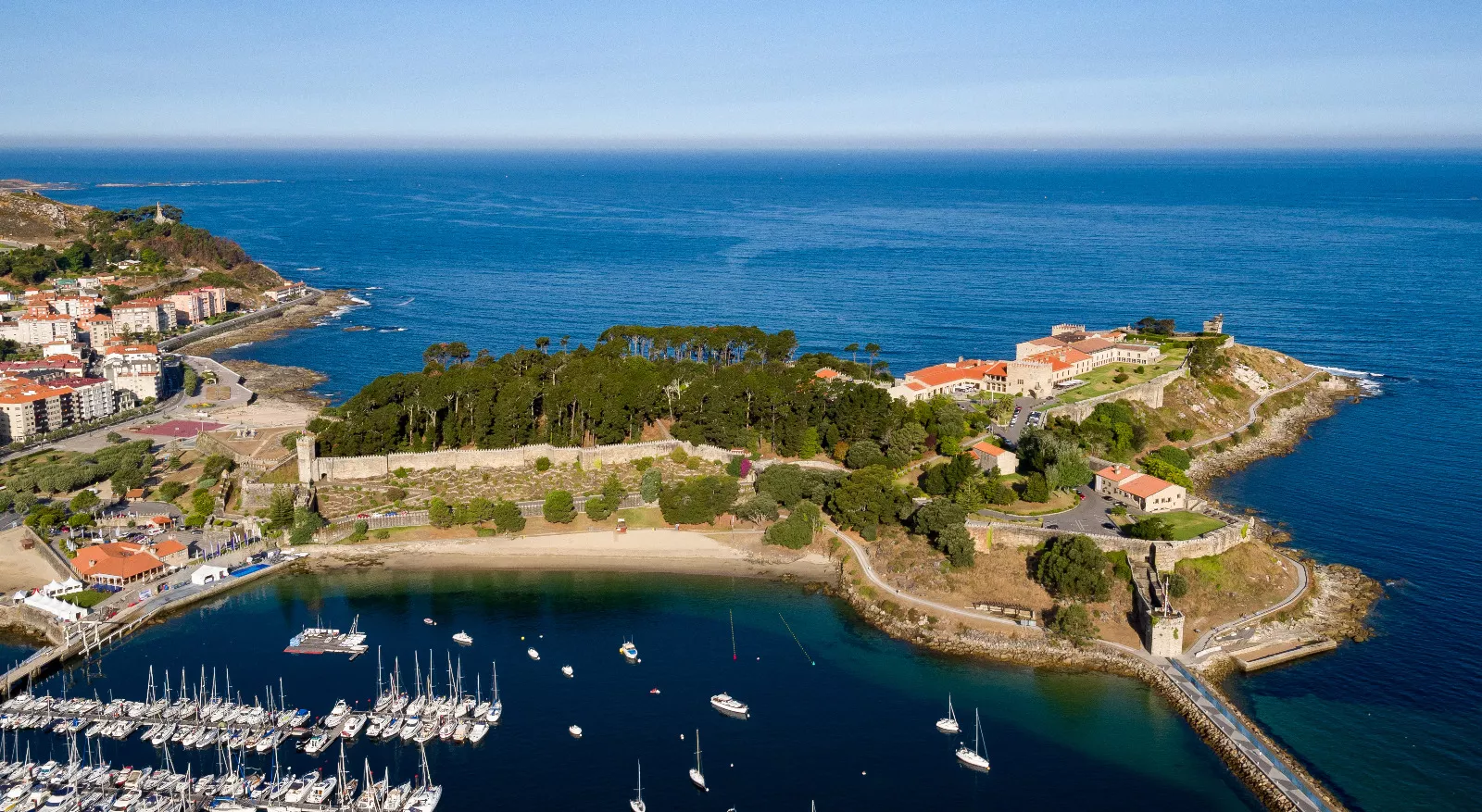
The Coastal Portuguese Way is the Atlantic alternative: it begins in Baiona, the town where the caravel Pinta arrived with news of the discovery of America, watched over by the fortress of Monterreal.
The first stages skirt the ría de Vigo with the Cíes Islands on the horizon and follow the Traída das Augas trail before joining the classic Portuguese Way at Redondela.
From there the itinerary strings together the bridge at Pontesampaio, the old town of Pontevedra, the spa town of Caldas de Reis and Padrón, home of Spain's most celebrated peppers.
The arrival in Santiago's World Heritage old town rounds off a week between the sea and the inland Rías Baixas.
Options and prices
Stage by stage
Day 1
Baiona
ArrivalArrival in Baiona, a seafaring town guarded by the fortress of Monterreal. Its harbour keeps a replica of the caravel Pinta, the first ship to bring news of the discovery of America.Night in Baiona
Day 2
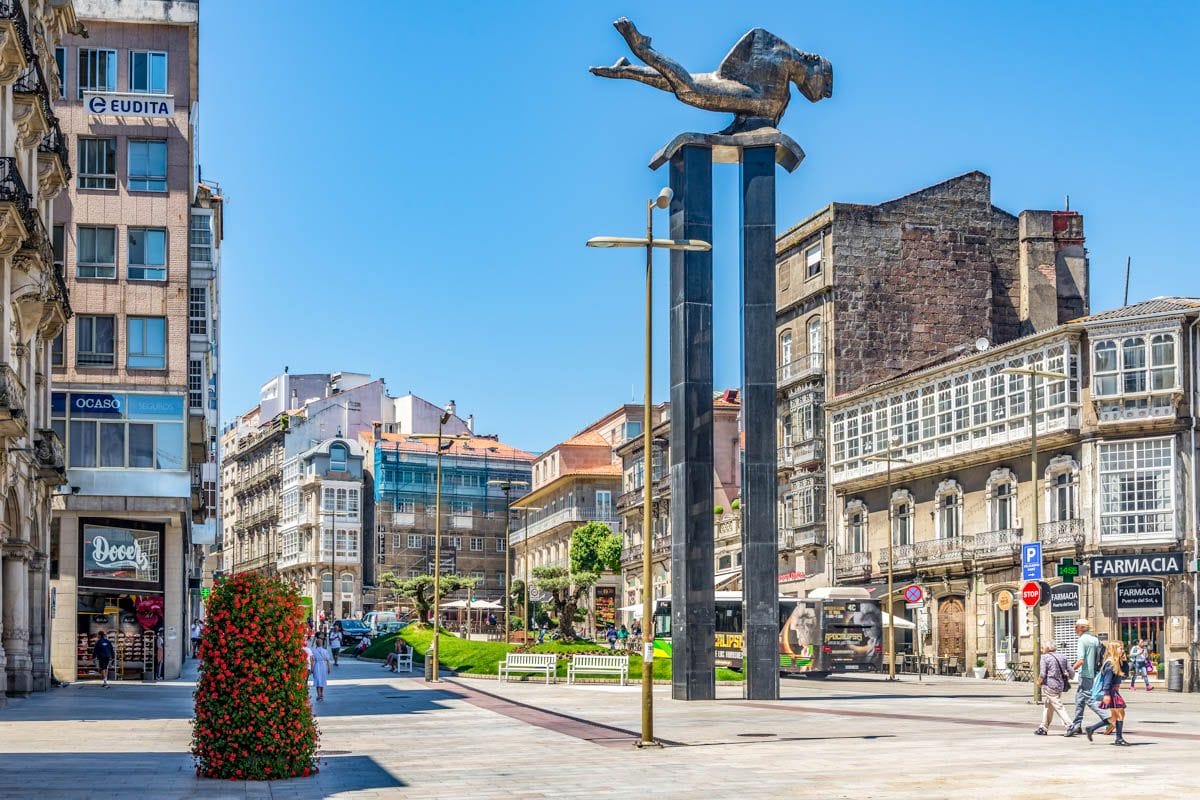
Baiona → Vigo
On foot25 km6 hA coastal stage through the Rías Baixas with the Cíes Islands always in sight. The path mixes beaches and shoreline trails before entering Vigo, Galicia's largest city.Night in Vigo
Day 3
Vigo → Redondela
On foot15 km3.5 hA short day along the Traída das Augas trail, a balcony path with constant views over the ría de Vigo, down to Redondela, where the route joins the central Portuguese Way.Night in Redondela
Day 4
Redondela → Pontevedra
On foot19.6 km5 hThis stage crosses the Roman bridge at Pontesampaio, scene of the 1809 battle in which Napoleon's troops were defeated. The arrival in Pontevedra's old town, with its church of A Peregrina, is among the loveliest on the Camino.Night in Pontevedra
Day 5
Pontevedra → Caldas de Reis
On foot21.1 km5 hLeave Pontevedra across the O Burgo bridge for a day of woods and streams to Caldas de Reis, a spa town since Roman times where you can soothe your feet in its thermal waters.Day 6
Caldas de Reis → Padrón
On foot18.6 km4 hA quiet stage to Padrón, a town tied to the writers Camilo José Cela and Rosalía de Castro. It is an essential food stop: its peppers, some hot and some not, are famous the world over.Day 7
Padrón → Santiago de Compostela
On foot24.3 km6 hThe final day passes the sanctuary of A Escravitude before entering Santiago. The final reward: the World Heritage old town and Obradoiro Square.Night in Santiago de Compostela
Day 8
End of our journey together
DepartureAfter your stay at the selected accommodation, our services come to an end, bringing your Camino journey to a close.
Pictures from the route
Frequently asked questions
Can I do the Camino on my own and stay in hotels or hostels?
Yes, of course. You can do the Camino independently and stay in hotels and hostels. At Camino Galicia, we offer this option without the need to join a group.
In fact, it is a very common choice: many people decide to do the Camino on their own to enjoy the experience at their own pace, disconnect and experience each stage in a more personal way.
We take care of organising your accommodation, luggage transfers and support throughout the Camino, so you only have to focus on walking and enjoying the experience.
Travelling alone doesn’t mean you’ll be alone: the Camino is a place where it’s very easy to meet other pilgrims and share moments along the route.
Will I have a guide accompanying me on the Camino de Santiago?
No. Our trips are designed so that you can walk the Camino at your own pace, without a guide accompanying you during the stages.
However, you won’t be alone. At Camino Galicia, we take care of organising all the necessary services, and you’ll have support throughout your trip to help with any questions or unexpected situations that may arise.
All you have to do is walk, enjoy the scenery and experience the Camino your own way.
What kind of footwear should I bring?
Hiking boots or trail shoes that are already broken in. New footwear is the most common cause of blisters on the Camino.
You do not need high boots: it rains in Galicia either way, and what matters is a comfortable, well-held foot. Bring seamless technical socks, two pairs in case one gets wet.
Do I need to train before walking the Camino?
You do not need to be fit, but arriving with some walking behind you makes a real difference.
Walking 1 to 2 hours a couple of days a week during the previous month is enough. If you can, do one long walk with the backpack and footwear you will actually use: it is the best way to find out in time what rubs.
What documents do I need for the trip?
A valid ID card or passport, and the European health card if you are coming from outside Spain.
For the Camino you also need the pilgrim credential, stamped at least twice a day over the last 100 km. It is what lets you claim the Compostela in Santiago. You can get it in Sarria at the parish, the hostels and the friends of the Camino associations.
Do I need travel insurance?
It is not compulsory, but it is strongly recommended. Travel assistance insurance covers medical care and, depending on the policy, cancellation if you end up unable to travel.
Before taking one out yourself, write to us: we will tell you exactly what your trip already covers so you do not pay twice for the same thing.
Do I have to carry my backpack all day?
No, if you want we transport your backpack from one accommodation to the next: leave it in the morning and find it on arrival.
You only walk with a small day pack carrying water, something to eat, a rain jacket and whatever you need along the way.
What should I carry in my day pack?
Water, something to eat, a rain jacket, sun cream, a cap and a charged phone. It can rain in Galicia at any time of year, so the rain jacket comes along even on a sunny morning.
Add plasters or blister dressings: they weigh nothing and you will be glad to have them.
When is the best time to walk the Camino?
April to October is the season with the best weather and everything open. May, June and September tend to be the most pleasant: mild temperatures and fewer people than in high August. As a result, they are also among the most popular months.
You can also walk in winter, but there is less daylight and some places close.
What is the Compostela and how do I get it?
It is the certificate issued by Santiago Cathedral to those who complete the Camino.
To claim it you must have walked at least the last 100 km and show your credential with two stamps a day over that stretch. You collect it at the Pilgrim's Office in Santiago.
Can I walk the Camino with children?
Yes, and it makes a great family trip. The stretch from Sarria has no technical difficulty and there are villages to stop at often.
The key is to shorten the stages and not set a schedule. Tell us their ages and we will build an itinerary with gentler days.
How far in advance should I book?
For summer and Easter it is worth booking months ahead: this is the busiest stretch and accommodation fills up.
The rest of the year there is more room, but the earlier you book, the more choice you will have over the itinerary and the places you stay.
Time flies! The 2027 Holy Year (Jacobean Year) is just around the corner, and accommodation is already starting to fill up.